
The Human Side of Fractional Leadership
Why More Executives Are Choosing “Portfolio Careers” Over Burnout

If you’ve spent years in the executive trenches, you know the drill: 80-hour weeks, back-to-back board meetings, midnight emails, and the never-ending pressure to deliver quarter after quarter. For a long time, that was the price of playing in the C-suite.
But something is changing. More and more senior leaders are walking away from the all-consuming demands of one company and carving out a different path: fractional leadership.
Fractional CFOs, CMOs, COOs, even CIOs—these are highly skilled leaders who work part-time or project-based across multiple organizations. On the surface, it looks like a cost-savings move for companies. But beneath that, there’s a quieter revolution happening: executives are rediscovering their own sustainability.
Why Human Sustainability Matters
We talk a lot about corporate sustainability—ESG, green transitions, governance. But what about the humans inside the system?
Traditional executive roles often demand total immersion. The job becomes your identity. The sacrifices stack up: missed family events, health issues, burnout cycles that take months or even years to recover from.
Fractional leadership flips that script. It gives senior professionals permission to work at a sustainable rhythm—to keep their sharpness, creativity, and strategic edge without burning out in the process.
The Benefits to the Individual
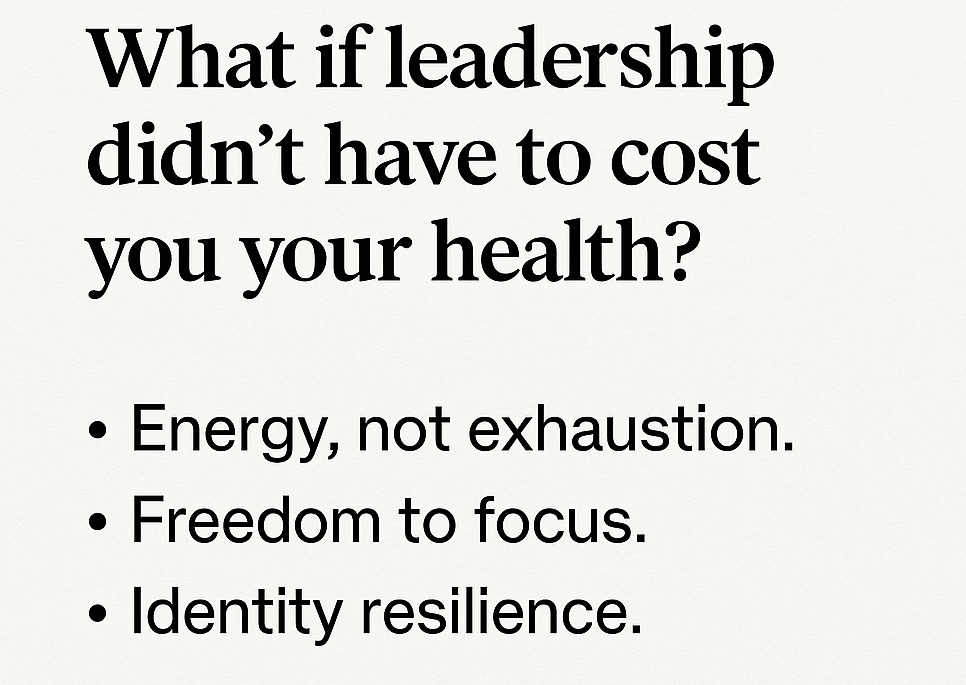
1. Control Over Energy
Instead of pouring everything into one role until the tank is empty, fractional leaders choose their commitments. They might take on two clients at a time, or five. They might prefer 20-hour weeks or 40. The point is: they design a rhythm that works for their life stage.
This control often leads to a renewal of energy. Leaders who once dreaded Monday mornings find themselves excited again—because their time and attention feel purposeful, not depleted.
2. Freedom to Focus on What They Do Best
Every executive has parts of the job they thrive in, and parts they secretly (or not so secretly) dread. A fractional CMO may love brand storytelling but hate annual budgeting marathons. A fractional CFO may thrive on strategy and forecasting but want less of the day-to-day compliance grind.
Fractional roles allow them to lean into their zone of genius—those projects and outcomes where they deliver the most value and feel most alive.
3. Portfolio Careers = Portfolio Identities
One of the most overlooked benefits is identity. In a traditional full-time exec role, your entire professional identity is wrapped around one company’s fate. If the board shifts direction, or if you’re suddenly out in a reorg, it feels like your whole self just evaporated.
Fractional leaders build what’s often called a portfolio career. They’re CFO for a startup, advisor to a nonprofit, mentor to a founder. That diversity of roles creates resilience. If one client drops, it’s not an identity crisis—it’s just part of the natural flow.
4. Health and Family Renewal
I’ve spoken with fractional executives who say their blood pressure dropped within months of leaving traditional C-suite grind. They’re able to exercise again, have dinner with family, or take that mid-week break to recharge.
It may sound small, but these are life-altering shifts. Imagine still delivering high-impact strategy—but also being present at your kid’s soccer game. Or finally writing the book you’ve always wanted to write while consulting three days a week.
5. Staying Relevant, Not Rusty
Some worry that stepping out of full-time roles means falling behind. In reality, fractional leaders often stay more relevant because they’re exposed to multiple industries, challenges, and technologies at once.
A fractional COO might help one company implement AI in supply chain while guiding another through a merger. That cross-pollination keeps skills sharp—and actually makes them more valuable.
Real-World Voices
One former Fortune 500 marketing VP told me: “I didn’t realize how much of myself I’d given away until I stepped out. Now, I work with two clients at a time, and I still make what I used to—but I actually feel human again.”
A fractional CFO shared: “I thought stepping back meant stepping down. What I found was the opposite—I get to choose work that excites me. I’m more energized now than I was 10 years ago.”
Another exec, after surviving burnout, described fractional work as a “second career that lets me keep making an impact—without sacrificing my health this time.”
These aren’t isolated cases. They’re part of a growing movement: executives realizing that sustainability applies to people too, not just organizations.
Why This Isn’t Just a “Step Down”
Fractional leadership isn’t early retirement or “consulting lite.” It’s a strategic choice. In fact, many fractionals report earning as much—or more—than they did in their corporate roles, but with better boundaries and quality of life.
It’s also a way to extend careers. Instead of burning out and checking out by 55, fractional leaders can stay engaged, contributing, and earning into their 60s and 70s—on their own terms.
Final Thought
The future of work isn’t just about automation, AI, and hybrid schedules. It’s also about human sustainability.
Fractional leadership offers executives something rare: the ability to keep playing at the highest level without sacrificing themselves in the process.
It’s proof that you don’t have to choose between impact and well-being. You can have both.
And maybe that’s the quiet revolution happening in 2025: leaders finally learning to lead their careers—and their lives—with sustainability at the center.
✨ Call to Action for LinkedIn
If you’ve ever wondered whether there’s life after the grind of corporate leadership, the answer is yes—and it might just be fractional.
About Byron Veasey
Byron is a data quality engineer and career strategist. His newsletter, Career Strategies provides insight and clarity for career transitions, job search, and career growth. He also provides Career Strategies Podcasts.
He is the author of the eBook, Job Search Survival Guide 2025 - Resilience, Strategy, and Real Stories for Today’s Job Market.
Use discount code HZIHMPX for 30% off at checkout until October 31, 2025